
Upholstery Stain Removal in Orlando, FL
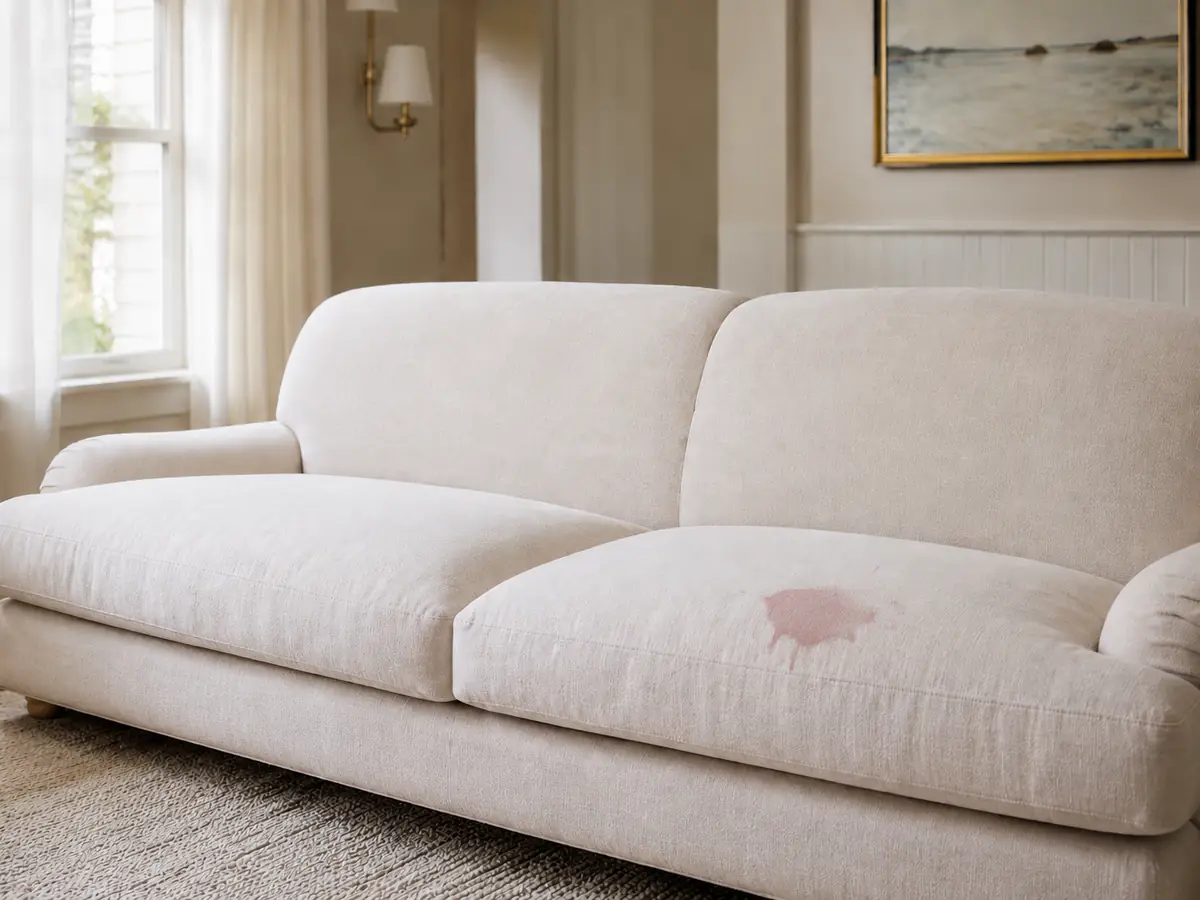
Professional upholstery stain removal in Orlando, FL. Red wine on a cream sofa, coffee down the cushion, grease on the arm of a chair, marker on a headboard. We identify what the stain is actually made of and treat it accordingly, because the wrong product on the right stain is what makes it permanent.
Prefer to call? Lines are open 24/7. You'll get an instant text back, and we reply fast to schedule your visit or send a free quote.
- Stain treatment is included in the cleaning, not billed on top
- We tell you what will lift and what will not, before we start
- Fabric tested first, so the cure is never worse than the stain
No surprise stain fee
5-Star Upholstery Stain Removal in Orlando, FL
See all reviews on Google
Amazing experience! Natasha did an incredible job cleaning our upholstery and mattresses. Everything looks and smells so fresh, and even some old stains are completely gone. She was very thorough, took her time, and…

Responded quickly, very professional and friendly. Greatly satisfied with work!

Natalia did a wonderful job cleaning my vintage chairs! She was able to come out the very next day, was extremely thorough, and took the time to answer all of my questions. The chairs look and feel fresh and the…
A stain is not one problem, it is six
Almost every product sold for stains treats them as if they were the same thing. They are not. A red wine ring and a grease mark need opposite chemistry, and the product that lifts one will set the other into the fabric for good. That is the single reason so many stains look worse after a home attempt than they did before it.
Before anything touches your sofa we work out which of the groups below the stain belongs to, check the manufacturer cleaning code on the tag, and test in a hidden spot. Then we treat it. Most of the marks people assume are permanent are simply the wrong chemistry away from lifting.
The six kinds of stain we see
Grouped by what the stain is made of, because that is what decides the treatment. Pet urine is its own job and has its own page.
Drinks and plant-based stains
The most common call we get, and the one most often made permanent at home.
Red wine, coffee, tea, soda and cola, fruit juice, beer, grass
These are tannin stains. Heat and ordinary alkaline cleaners set them into the fibre rather than lifting them, which is why a mug of coffee blotted with hot water often looks worse afterwards. We work them cool with an acid-side agent, then rinse and extract so nothing is left behind to attract new soil.
Protein stains
Anything that came from a body or a kitchen, and the group most sensitive to temperature.
Blood, milk, egg, vomit, sweat, baby formula, food spills
Protein coagulates. Hot water cooks it into the weave permanently, the same way an egg sets in a pan, so these are always treated cold with an enzyme that digests the protein first. Sweat also carries salts that leave a ring long after the mark itself has gone.
Oil, grease and body oil
The stains nobody spills. They arrive slowly and you notice them one day on the arms and headrests.
Cooking oil, butter, pizza grease, salad dressing, hand lotion, sunscreen, makeup and foundation, hair product, body oil and sebum
Oil does not dissolve in water, so a wet cloth spreads it into a larger, fainter ring. These need a solvent or degreaser that breaks the oil apart first, applied sparingly. Body oil on headrests and arm caps is the single most common thing we clean, and it is why a sofa can look dull all over without a single visible spill.
Dyes and pigments
The hardest group, because the colourant was engineered to bond to a surface and stay there.
Ballpoint and gel ink, permanent marker, lipstick, hair dye, shoe polish, crayon, food colouring, dye transfer from new jeans or a throw
We work these with the right solvent for the carrier and lift the colour in stages rather than flooding it, because flooding a dye stain spreads the halo. We will tell you honestly when a dye stain is likely to lighten rather than disappear, and we say that before the work, not after.
Gum, wax and sticky solids
These are not really stains. They are a solid sitting on the fabric, plus whatever colour they left behind.
Chewing gum, slime, candle wax, tape and sticker residue, putty, play dough
Gum is chilled until it turns brittle and lifts away instead of smearing. Wax is warmed gently and absorbed, never scraped. Slime is two problems at once, a glue that has to be released and a dye that has to be treated separately, which is why pulling at it usually leaves a coloured patch behind.
Solvent-risk stains
Where a home remedy can do more damage in ten seconds than the stain ever did.
Nail polish, latex and oil paint, super glue, correction fluid, adhesive remover
Acetone nail polish remover destroys acetate and triacetate on contact and damages modacrylic, all of which are common in decorative and older upholstery. It does not stain the fabric, it dissolves it, and there is no repair. Call us before reaching for a remover, and we will test the fibre first.
What actually makes a stain permanent
Very few stains are hopeless on day one. These are the six things that turn a spill into something nobody can remove.
Our simple six-step process
Identify the stain, check the tag, test the fabric, then treat it. In that order, every time.
Inspect fabric
Identify fabric type and test for colorfastness before we begin.
Vacuum
Lift loose dirt, dust and pet hair from every seam and crevice.
Pre-treat stains
Target spots, traffic marks and odor sources individually.
Deep clean
Hot-water extraction with gentle, pet-friendly cleaning solutions.
Extract moisture
Pull out water so drying time stays short and even.
Groom and dry
Groom the pile and speed-dry the fabric for a fresh finish.
What we bring to every job
The equipment and the habits that separate a professional clean from a rented machine and a bottle.
Heat is the only thing that dissolves the body oil built up on headrests and arms, and strong suction is what pulls the solution back out rather than leaving it in the foam. That second part decides how your furniture looks the next morning, and in Florida humidity it decides whether it smells.
Protein, oil, tannin and dye each need the opposite approach, and using the wrong one sets the stain permanently. We identify what we are looking at first, which is why an honest answer about what will lift comes before we start.
We carry an anti-browning treatment for natural fibres that were over-wetted, and a neutraliser for the bright patch left behind when someone cleaned a stain with laundry detergent. Neither would exist if those mistakes were not common.
Booking confirms in writing, you get a reminder before the day and a text when we are on the way, and the invoice arrives digitally so you can pay online. The most common complaint about this trade is not the cleaning, it is not knowing whether anyone is turning up.
Questions, answered
Do you charge extra for stain removal?
No. Treating the stains is part of a standard cleaning, so a sofa with three spots on it is still from $149. Heavier or specialty work occasionally needs extra time on site, and we tell you that when we look at the piece rather than adding it to the bill afterwards. Our minimum service is $115.
Can you get an old stain out?
Sometimes, and we will not pretend otherwise. Age works against every stain, and one that has been heat-set by a steam cleaner or an iron may be locked into the fibre for good. We inspect the piece, tell you what we think will lift and what probably will not, and you decide before we start.
Why did my stain come back a day after I cleaned it?
That is wicking. The spill soaked past the fabric into the cushion, and when only the surface was cleaned the rest travelled back up as the padding dried. It is the most common reason a home treatment looks like it worked and then does not. We extract the moisture rather than leaving it in the foam.
What is the worst thing I can do to a fresh spill?
Rub it, or reach for hot water. Rubbing spreads the stain and roughens the nap so the patch stays visible even after the colour is gone. Hot water sets protein and tannin stains permanently. Blot with a clean white cloth, work inward from the edge, and call us.
Is there any fabric you cannot treat?
Yes. If the manufacturer tag reads X, the fabric is vacuum only and cannot take water or solvent from anyone, us included. Cleaning it anyway risks shrinkage, rings and colour bleed. We check the tag before we touch the piece and tell you if that is what you have.
Do you handle pet stains too?
Yes, but pet urine is a different job from a food or drink spill because it soaks into the padding and leaves odor crystals behind. That is treated with enzymes as its own add-on from $69. See our pet stain and odor removal page for how it works.
Recent upholstery cleaning jobs across Greater Orlando
The areas we have worked in and the pieces we cleaned there, taken straight from our own schedule and updated as each job is finished.
and 3 more areas across Greater Orlando
Do not see your area? We almost certainly still cover it, so just ask.
Related services
Got a stain you have been living with?
Send us a photo and we will tell you honestly whether it will lift. Free quotes, and most weeks we have same-week openings across Orlando.
Prefer to call? Lines are open 24/7. You'll get an instant text back, and we reply fast to schedule your visit or send a free quote.