
How to Get Stains Out of a Couch Without Setting Them In
What is in this guide
To get a stain out of a couch, blot it fast without rubbing, work from the outside of the spot inward, check the cleaning code, and match the cleaner to what the stain actually is. Coffee, blood and grease each need a different treatment, and using the wrong one is what turns a fixable mark into a permanent one.
Most fresh spills do come out at home. What follows is the part the average stain guide leaves out. Which stains are genuinely worth your time, why a spot you cleaned yesterday reappeared overnight, and the specific mistakes that arrive on our van as a permanent mark. We clean upholstery in Orlando homes, so most of what we see is somebody’s second attempt rather than their first.
Start here, before you touch it
Thirty seconds of triage decides more than the product you reach for.
- Find the tag. W means water-based cleaners are fine. S means solvent only and no water. WS takes either. X means vacuum only, so stop and call someone. The tag is usually under a cushion or beneath the frame.
- Name the stain. Protein, oil, tannin and dye each need the opposite treatment. If you genuinely do not know what it is, treat it as protein and keep everything cool, because that is the assumption that fails most gently.
- Check whether it is still wet. Damp is a spill. Dry is a stain. Damp comes out far more often, and it is the only reason to hurry.
- Grab a white cloth. Not the tea towel in your hand. Colour transfers into damp upholstery, and a dye stain on top of the original stain is a much harder job than what you started with.
What actually comes out at home
Being honest about this saves you an afternoon and, more often, saves the fabric. Here is where each common couch stain really lands.
Comes out at home most of the time if it is still damp. Dries to a tannin ring that gets harder each day.
Fresh, usually yes. Dry and on a light fabric, the dye is already bound to the fiber and you are lightening it, not removing it.
Cool water and an enzyme lift these readily. One splash of hot water and it is permanent, which is the single most common way these are lost.
Fresh grease comes out. Body oil on a headrest or arm has usually built up over months and needs solvent and extraction, not a spot treatment.
Ballpoint often responds to alcohol. Permanent marker and gel ink usually do not, and both spread fast if you push them.
The visible mark is the smallest part. The rest is in the padding, which is why the smell returns in humid weather after a surface clean.
Acetone destroys acetate and triacetate outright. On anything you cannot identify, this is the one to leave alone.
Worth an attempt, never worth a promise. What has bound to the fiber is bound.
Why the stain came back as it dried
This is the single most common thing people call us about, and almost no home guide explains it. You treated the spot, it looked clean while it was damp, and by the next morning a ring or the original mark had reappeared.
The stain did not come back. It was delivered back. Cleaning solution that soaked past the fabric into the foam carries dissolved stain with it, and as the cushion dries, that moisture travels back up to the surface by capillary action and evaporates there, leaving everything it was carrying at the top. Cleaners call it wicking. On natural fibres such as cotton, linen and jute there is a second version of it, where tannins in the fibre itself migrate up and leave a yellow-brown cast, which is why an over-wetted cotton sofa can dry dirtier than it started.
Three things prevent it, and they matter more than which product you chose.
- Use less liquid than feels right. The goal is a damp cloth, not a wet cushion. If liquid reaches the foam, you have already created the problem.
- Take out more than you put in. After every application, press a dry white cloth into the spot and lift, repeatedly, until the cloth stops coming up damp.
- Dry it fast. A fan pointed at the cushion for an hour does more than anything you can buy. Slow drying is what gives moisture time to travel.
In Florida this matters more than it does elsewhere. Indoor humidity here keeps upholstery damp for hours longer than the same job would take in a dry climate, which widens the window for wicking and, on a cushion that stays wet overnight, invites a musty smell on top of the original stain.
Removing stains by type
Match the cleaner to the stain. The University of Illinois Extension stain guide is built on the same principles.
Coffee, tea and wine
Blot up as much as you can, then sponge the spot with a solution of a little mild dish soap in cool water and blot again, working from the outside in. Repeat until it lifts. Treat wine quickly, because the colour sets as it dries and after that you are bleaching rather than cleaning.
Blood and other protein stains
Keep everything cool, as above. Blot with a cool dish-soap-and-water solution, then work in an enzyme cleaner and give it time to break the protein down. If a shadow remains on a light fabric, dab 3 percent hydrogen peroxide on the spot, let it sit briefly and blot, after testing a hidden area first, since peroxide can lighten some fabrics.
Grease and oily food
Start dry. Sprinkle baking soda or cornstarch over the spot to pull the oil out of the fabric, leave it a few minutes and vacuum it up. Then treat what is left with a little dish soap, which is made to cut grease, on a water-safe fabric, or a solvent on an S-code one. Body oil is the same chemistry but a different job, because it builds up over months on headrests and arms rather than landing in one spot, and it needs solvent treatment and extraction rather than dabbing.
Chocolate
Chocolate is worth its own entry because it is a combination stain, three problems arriving at once. There is fat from cocoa butter, which behaves like grease and repels water. There is tannin from the cocoa, the same brown dye that makes coffee and red wine stubborn. And in milk chocolate, chocolate milk and ice cream there is dairy protein, which behaves like blood.
That is why a single cleaner or a quick wipe never quite finishes it. Lift any solid material first without pressing it in, cut the grease with a little dish soap, keep the water cool throughout so the milk protein does not cook into the fibres, and only then work on the last of the brown colour. Treating it in that order beats all three parts. Treating it with hot water sets the protein and locks the rest in behind it.
Ink
Ink responds to rubbing alcohol, which is a solvent. Dab the alcohol onto a clean white cloth or cotton ball and blot the ink, moving to a fresh part of the cloth as the ink transfers so you never grind it back in. Do not soak the fabric, and stop once no more ink lifts. Ballpoint usually gives way. Permanent marker and gel ink usually do not, and both travel sideways fast, so a small mark becomes a large one if you keep going.
Pet stains
Pet accidents need an enzyme cleaner on a water-safe fabric, because only an enzyme breaks down the residue that causes both the stain and the smell. The ASPCA recommends an enzymatic cleaner for exactly this reason. What makes urine different from every other stain on this page is depth. The mark you can see is the top of a much larger patch in the foam, which is why the smell returns on a humid day weeks after the surface looked fine, and why it needs the extraction our pet stain and odour removal service provides.
Water rings
A water ring is not really a stain, it is where the fabric dried unevenly. The fix is to re-wet the whole cushion or panel evenly, with a damp cloth on a water-safe fabric or rubbing alcohol on an S-code one, so it dries at the same rate all over, then dry it quickly and fully.
Six ways a home stain job goes wrong
These are the ones that turn a routine spot into a call. None of them are careless. All six are what a sensible person does when a guide does not warn them.
- A coloured cloth. Dye moves out of the towel and into damp upholstery, and now there are two stains on top of each other. White cloths only, every time.
- Hot water on protein. Blood, milk and egg bind to the fibre the moment they meet heat. One kettle ends the job.
- Over-wetting. The wicking described above, plus a real risk of a musty cushion in Florida humidity.
- Water on an S-code fabric. The tag says solvent only for a reason. Water on these leaves rings, and on some can shrink or pucker the weave permanently.
- Laundry detergent, or anything with optical brighteners. This is the one nobody sees coming. Brighteners are designed to make clothes look whiter by fluorescing in daylight, and they are in most laundry products. Left in upholstery, which cannot be rinsed, they leave a coating on that patch which glows slightly brighter than the fabric around it. The original stain is gone and you are now looking at a pale bright shape instead. We keep a brightener neutraliser on the van because this arrives often enough to need one.
- Rubbing. Even when the colour lifts, rubbing distorts the pile. The fibres in that patch now lie differently to everything around them, catch the light differently, and read as a visible spot with no stain in it at all.
Stain that will not budge, or you are not sure how to treat it
Some stains are one wrong move from permanent. If a mark will not lift, or your fabric is delicate or has no cleaning tag, we treat stains on couches of every fabric across Orlando, with an honest look at what will lift before we start.
Prefer to call? Lines are open 24/7. You'll get an instant text back, and we reply fast to schedule your visit or send a free quote.
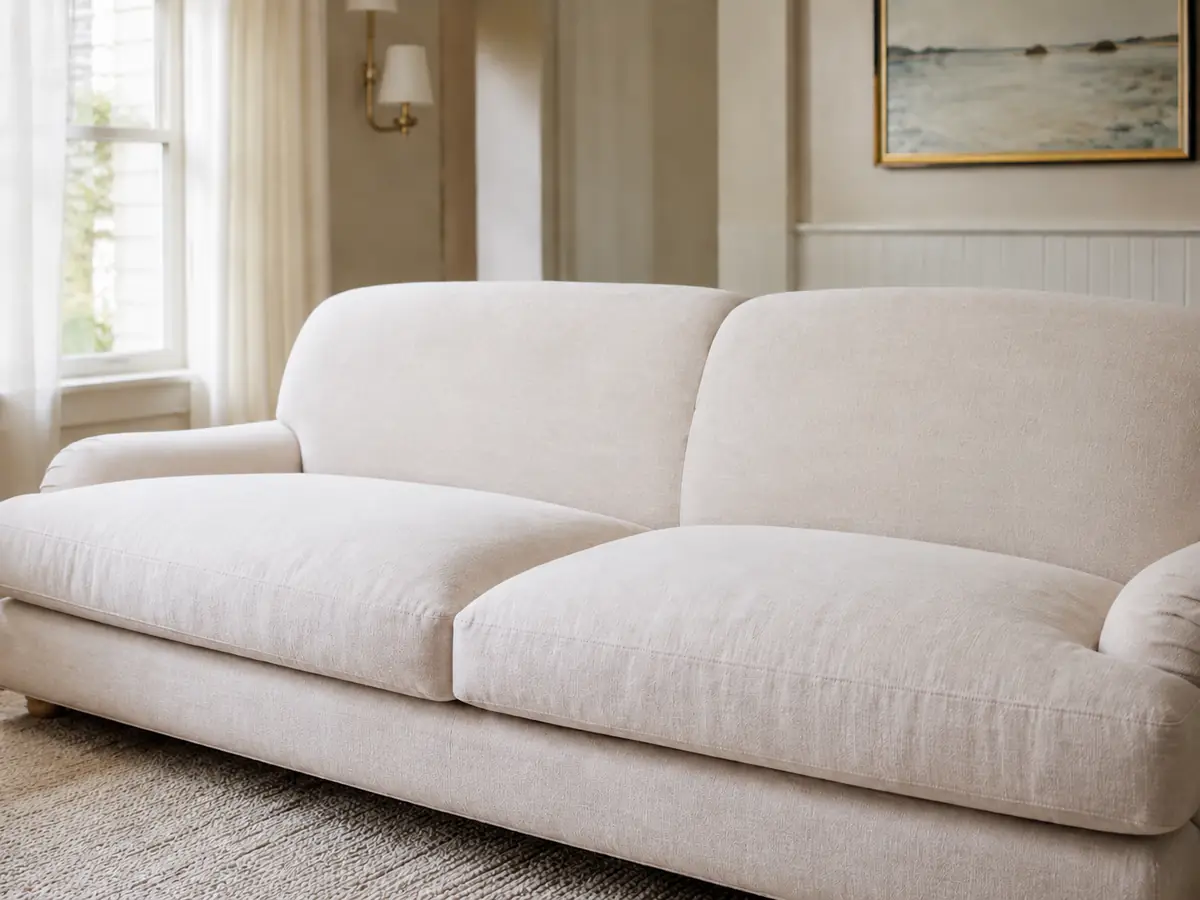
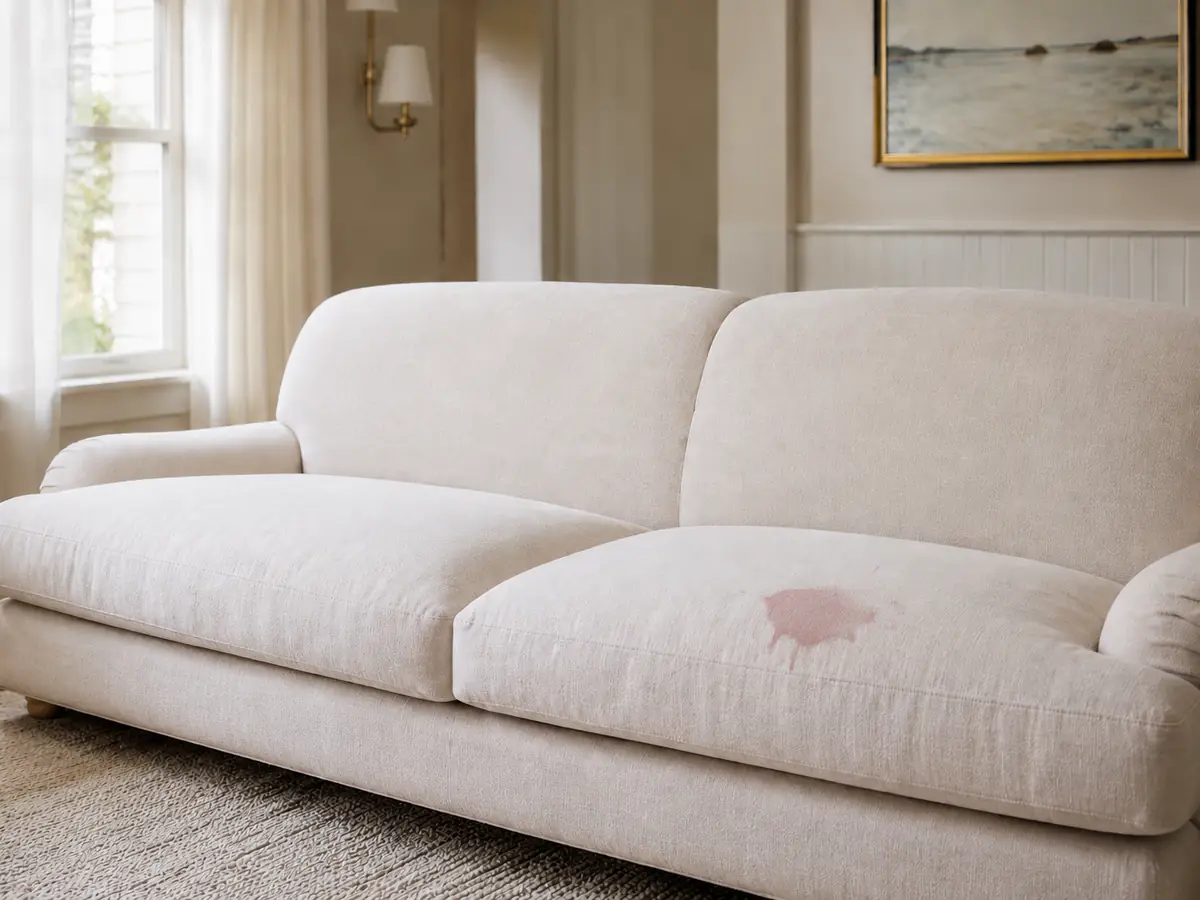
Drag to see the difference
A real result from our couch and sofa before and afters around Orlando.
When it is worth calling someone
Two careful attempts is the honest limit. If a stain has not moved after two goes with the right method, a third is not going to change the chemistry, and each additional attempt adds moisture, friction and the chance of a permanent ring. Call when any of these are true.
- It has been treated twice and has not moved.
- It has reappeared after drying, which means it is deeper than the fabric.
- The tag says S or X, or there is no tag at all.
- It is urine, because the visible mark is not the problem.
- The piece matters to you more than the stain annoys you.
At Pink Upholstery Cleaning we treat stains on couches of every fabric for homes across Orlando. Stain treatment is part of the cleaning rather than an extra line, so a sofa with three spots on it is still from $149, and our minimum service is $115. Pet urine is the one exception, from $69, because it needs a different treatment at a different depth. Our upholstery stain removal page covers how each stain type is handled, and every quote is free.
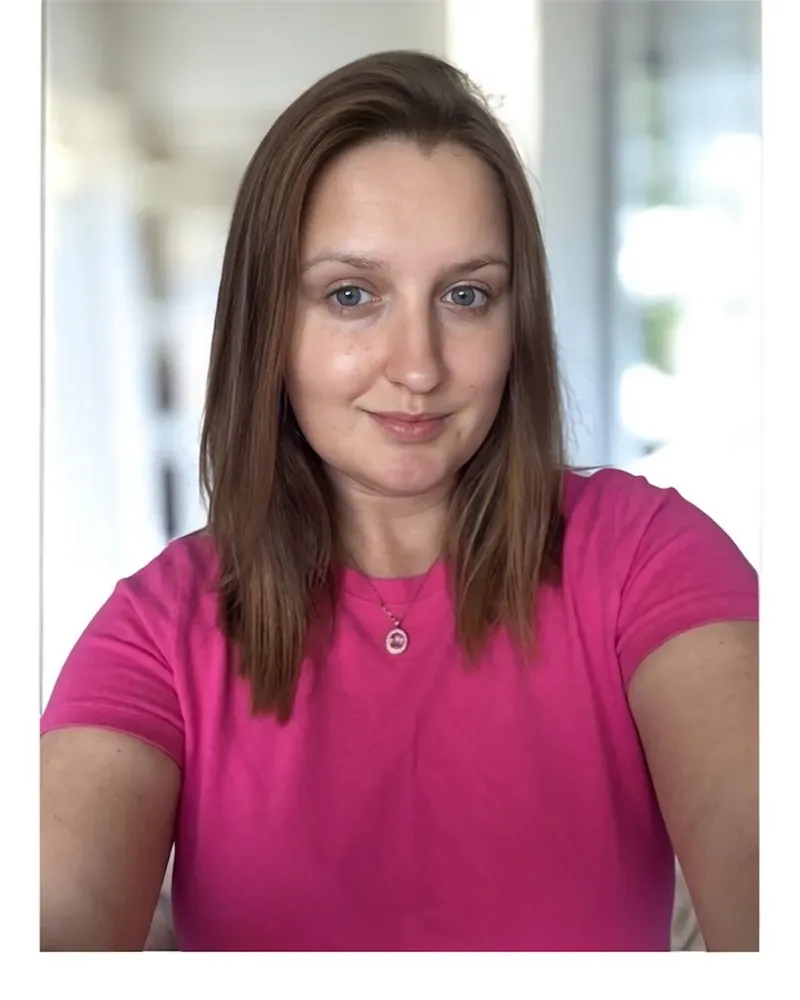
Natalia is the owner of Pink Upholstery Cleaning, a woman-owned, insured upholstery, furniture and mattress cleaning business serving Orlando, Florida. She cleans couches, mattresses and chairs across the Orlando area every week, so the advice here comes from hands-on experience, not theory.
Questions, answered
How do you get stains out of a couch?
Blot the stain fast without rubbing, work from the outside of the spot inward, and check the cleaning code before you use any liquid. Then match the cleaner to the stain: a dish-soap-and-cool-water solution for most, rubbing alcohol for ink, and an enzyme cleaner for pet stains. Test any product on a hidden spot first.
Why did my stain come back after the couch dried?
That is wicking. The liquid you cleaned with soaked past the fabric into the foam, and as it dried it travelled back up to the surface and carried the dissolved stain with it. It is not the stain returning, it is the stain being delivered back to the top. Use as little moisture as possible, blot out more than you put in, and dry the spot fast with a fan.
How do you get old, set-in stains out of a couch?
Soak the spot in an enzyme cleaner, or repeat a gentle dish-soap-and-water treatment and let it work. Be realistic, though. Some old stains, especially dye stains or protein stains that were set with heat, are permanent, and a professional gives the best chance of lifting what is left.
How do you get blood out of upholstery?
Use cool water only, never hot, because heat sets protein stains permanently. Blot with a solution of a little dish soap in cool water, then treat with an enzyme cleaner, and use 3 percent hydrogen peroxide as a last resort after testing on a hidden area.
How do you get grease or oil stains out of a couch?
Sprinkle baking soda or cornstarch over the spot to absorb the oil, leave it a few minutes and vacuum it up, then treat with a little dish soap, which cuts grease, on a water-safe fabric, or a solvent on an S-code one. A 50/50 mix of white vinegar and water helps rinse the last of it.
How do you get chocolate out of a couch?
Chocolate is a combination stain, part grease from cocoa butter, part tannin dye from the cocoa and, in milk chocolate, part dairy protein. Lift the solids off first, cut the grease with a little dish soap, keep the water cool throughout so the milk protein does not set, then work on the remaining brown colour. Hot water sets the protein and locks the rest in.
How do you get ink out of a couch?
Dab rubbing alcohol onto a clean white cloth or cotton ball and blot the ink, moving to a fresh part of the cloth as the ink transfers so you do not spread it. Do not soak the fabric, and test on a hidden spot first.
I cleaned a stain and now that patch looks brighter than the rest. What happened?
You almost certainly used laundry detergent or a product containing optical brighteners. They are designed to fluoresce in daylight so clothes look whiter, and upholstery cannot be rinsed, so the coating stays in that patch and it now glows slightly brighter than the fabric around it. It needs a brightener neutraliser rather than more cleaning, because cleaning it again only adds more.
The stain is gone but I can still see the spot. Why?
You have most likely distorted the pile by rubbing. The colour is out, but the fibres in that patch now lie differently to the fabric around them, so they catch the light differently and the mark still reads as a spot. Brushing the pile back in one direction while it is slightly damp, then drying it flat, often evens it out.
Does professional stain removal cost extra?
Not with us. Stain treatment is part of the cleaning rather than a line item, so a sofa with three spots on it is still from $149. Pet urine is the exception, because it reaches the padding and needs a different treatment, and that is an add-on from $69.
Explore our cleaning services
Got a stain you would rather not risk
Get a free, no-obligation quote today. Call or book online and most weeks we have same-week openings across Orlando.
Prefer to call? Lines are open 24/7. You'll get an instant text back, and we reply fast to schedule your visit or send a free quote.