
How to Clean a Mattress (and What's Living Inside Yours)
What is in this guide
- The rule that governs the whole job
- What is inside your mattress
- Why Florida makes it worse
- What you will need
- How to clean a mattress step by step
- Cleaning by mattress type
- Mattress toppers and pads
- Removing common mattress stains
- Deodorizing with baking soda
- How often to clean a mattress
- When to call a professional
To clean a mattress, strip the bed and wash the bedding in hot water, vacuum the whole mattress, spot-treat any stains, then sprinkle baking soda over the surface to deodorize, let it sit, vacuum it off and let the mattress air out before you make the bed. Done properly it takes an afternoon and leaves your mattress fresher, drier and healthier to sleep on.
Your mattress is one of the dirtiest things you own, and most people never actually clean it. You spend roughly a third of your life on it, and every night it collects sweat, body oils, dead skin cells and the dust mites that feed on them. Here in Orlando, our humidity makes all of that worse. This guide walks through exactly how to clean and deodorize a mattress at home, backed by guidance from the U.S. EPA and the University of Florida, and it covers when a deep professional clean is the smarter call.
The rule that governs the whole job
A mattress is different from everything else you clean, and it comes down to one thing. You cannot rinse it. A shirt goes in a machine. A cushion cover comes off. Even a sofa can be extracted repeatedly until the water runs clear. A mattress is a large absorbent block you cannot lift into a sink and cannot wring out.
Every decision on this page follows from that. Use the least liquid that will do the job. Take out more than you put in. Dry it harder than feels necessary. Anything you leave in there stays in there.
It also means the real failure mode is not a mattress that stays dirty. It is a mattress that stays damp. Mildew growing inside the padding cannot be extracted and cannot really be fixed, so a well-meant deep clean that soaks the thing is worse than not cleaning it at all. If you take one thing from this guide, take that.
What is inside your mattress
A used mattress is a small ecosystem. Over months and years it absorbs sweat, skin oils and thousands of dead skin cells you shed while you sleep, and those skin cells are the main food source for house dust mites. Dust mites are microscopic, so you never see them, but they are extremely common. The U.S. Environmental Protection Agency lists them as one of the most common indoor asthma triggers and notes that their body parts and droppings are what set off allergy and asthma symptoms.
They are also widespread. A national government survey, the First National Survey of Lead and Allergens in Housing, found that more than 45 percent of U.S. homes have bedding with dust mite allergen at levels linked to developing allergies. In other words, the mattress and bedding are usually where the highest concentrations in the whole house are found. Cleaning your mattress is not just about looks or smell, it is about the air you breathe for eight hours every night.
Why Florida makes a dirty mattress worse
Dust mites need moisture in the air to survive, and they cannot drink, so they absorb water straight from humid air. They reproduce quickly above about 50 percent relative humidity and start to die off below it. That is where Orlando works against you. University of Florida IFAS Extension notes that the average relative humidity in Florida is around 74.5 percent, far above the 30 to 50 percent range the EPA recommends for a healthy home, and in our summers indoor humidity rarely drops below 50 percent at all.
Dust mites thrive above roughly 50 percent humidity and struggle below it. Florida averages 74.5 percent, so mattresses here stay in the danger zone most of the year. Sources: U.S. EPA, University of Florida IFAS Extension.
The practical takeaway is simple. A mattress in a humid Orlando bedroom collects moisture and grows dust mites faster than the same mattress would in a dry climate, so it benefits from more regular cleaning and from keeping your indoor humidity down with air conditioning or a dehumidifier.
What you will need
You almost certainly have most of this already:
- A vacuum with an upholstery or crevice attachment
- Baking soda
- Mild dish soap and, for pet or protein stains, an enzyme cleaner
- Hydrogen peroxide (3 percent) for stubborn sweat or blood marks
- A few clean white cloths and a spray bottle of cool water
- A fan, or open windows on a dry day, to speed drying
How to clean a mattress step by step
- Strip the bed and wash the bedding in hot water. The EPA recommends washing bedding weekly in water above 130 degrees Fahrenheit, which is hot enough to kill dust mites. Do this first so it is drying while you work.
- Vacuum the entire mattress. Use the upholstery attachment and go slowly over the top, sides and every seam, where skin cells, dust and mites collect. This single step removes the bulk of what makes a mattress dirty.
- Spot-treat any stains. Treat marks now, before you deodorize. See the stain section below for the right method for each type.
- Sprinkle baking soda over the whole surface. An even, light layer draws moisture and odor out of the mattress. Leave it for at least one to two hours, and longer if the mattress smells musty.
- Vacuum the baking soda off. Go slowly again so you pull it out of the fabric rather than just off the surface.
- Air it out. Let the mattress dry fully before you remake the bed. A fan, an open window on a dry day, or a little sunlight all help. Never put bedding back on a mattress that still feels damp.
- Protect it going forward. A washable mattress protector and lower indoor humidity keep it cleaner for far longer between deep cleans.
Does your mattress type change how you clean it
The steps are the same for every mattress, but how much moisture you use is not, and getting that wrong is the most common way people damage a bed at home. The single rule that matters most is that foam should never get soaked. Here is how the main types differ.
- Memory foam and foam mattresses. Foam soaks up liquid like a sponge and holds onto it, which leads to mold and can break the foam down over time. Never saturate a foam mattress and never use a steam cleaner on it. Spot-clean with the least moisture you can, blot rather than soak, and dry it completely with a fan before you remake the bed.
- Hybrid mattresses. A hybrid is a layer of foam over coils, so the foam is what holds moisture. Treat it like memory foam, keep any liquid light, and dry it thoroughly.
- Innerspring and coil mattresses. These are the most forgiving. Liquid tends to drain through rather than sit in the surface, and they dry faster, so they handle spot-cleaning better. Still dry them fully, because moisture trapped around the coils can cause rust over time.
- Latex mattresses. Natural latex resists moisture and is naturally hypoallergenic, but skip the steam cleaner here too, since the high heat can degrade the latex.
- Pillow-top mattresses. The thick padded surface holds water and takes longer to dry, so use less moisture and give it extra drying time.
Whatever you are sleeping on, the rule professionals follow is simple. Use the least moisture that does the job, and never put bedding back until the mattress is completely dry.
Short on time, or worried about damaging your mattress
We clean and sanitize every kind of mattress in homes across Orlando, matching the method to memory foam, hybrid, innerspring or latex. Every quote is free, with no hidden fees.
Prefer to call? Lines are open 24/7. You'll get an instant text back, and we reply fast to schedule your visit or send a free quote.
Mattress toppers and pads
A topper is cleaned by what is inside it, and the two kinds behave in opposite ways. Check the care tag before anything else, because getting this wrong is how a topper is ruined in one wash.
- Memory foam and latex toppers cannot be machine washed. A washer tears the foam apart and it holds so much water that it will not dry through, which leaves mildew inside where nothing can reach it. Spot-clean these instead, with the least liquid that will do the job, then dry them flat with airflow on both faces.
- Fiberfill, down and feather toppers often can be washed if the tag allows it and your machine is large enough to let it move freely. Use a gentle cycle and cool water, then dry on low heat with a couple of clean tennis balls to break up the clumps. A down topper that is put away even slightly damp will smell, so give it longer than you think it needs.
- Anything with an X code, or no tag at all, gets vacuumed and aired only.
Toppers are also worth honest expectations. They compress and lose their support long before they look worn out, so if a topper is several years old, flattened in the sleeping positions, or has taken a full accident that reached the middle, replacing it is usually the better answer than cleaning it. The mattress underneath is the part worth treating properly, since that is what you actually keep.
How to remove common mattress stains
Always blot, never rub, and work from the outside of the stain inward so you do not spread it. Test any solution on a hidden corner first, because peroxide can lighten some fabrics.
- Yellow sweat and body-oil marks. Make a paste of baking soda, a little 3 percent hydrogen peroxide and a single drop of dish soap. Dab it on, let it dry, then vacuum and wipe with a barely damp cloth.
- Blood. Cold water only, never hot, because heat cooks the protein into the fibres permanently. Blot from the outside in with cold water and a little dish soap, then an enzyme cleaner if a shadow lingers, and 3 percent hydrogen peroxide only as a last resort after testing a hidden corner. Period blood is treated exactly the same way, with one practical difference: it is usually a larger stain found in the morning after hours to soak in, so it needs more patience and considerably more attention to drying afterwards.
- Urine and pet accidents. An enzyme cleaner is the only thing that truly breaks down urine and its smell. Blot up as much as possible, apply the enzyme cleaner, and give it time to work. Fresh accidents usually come out at home, but urine that has soaked deep into the padding often needs professional extraction, which is where our pet stain and odor removal service comes in.
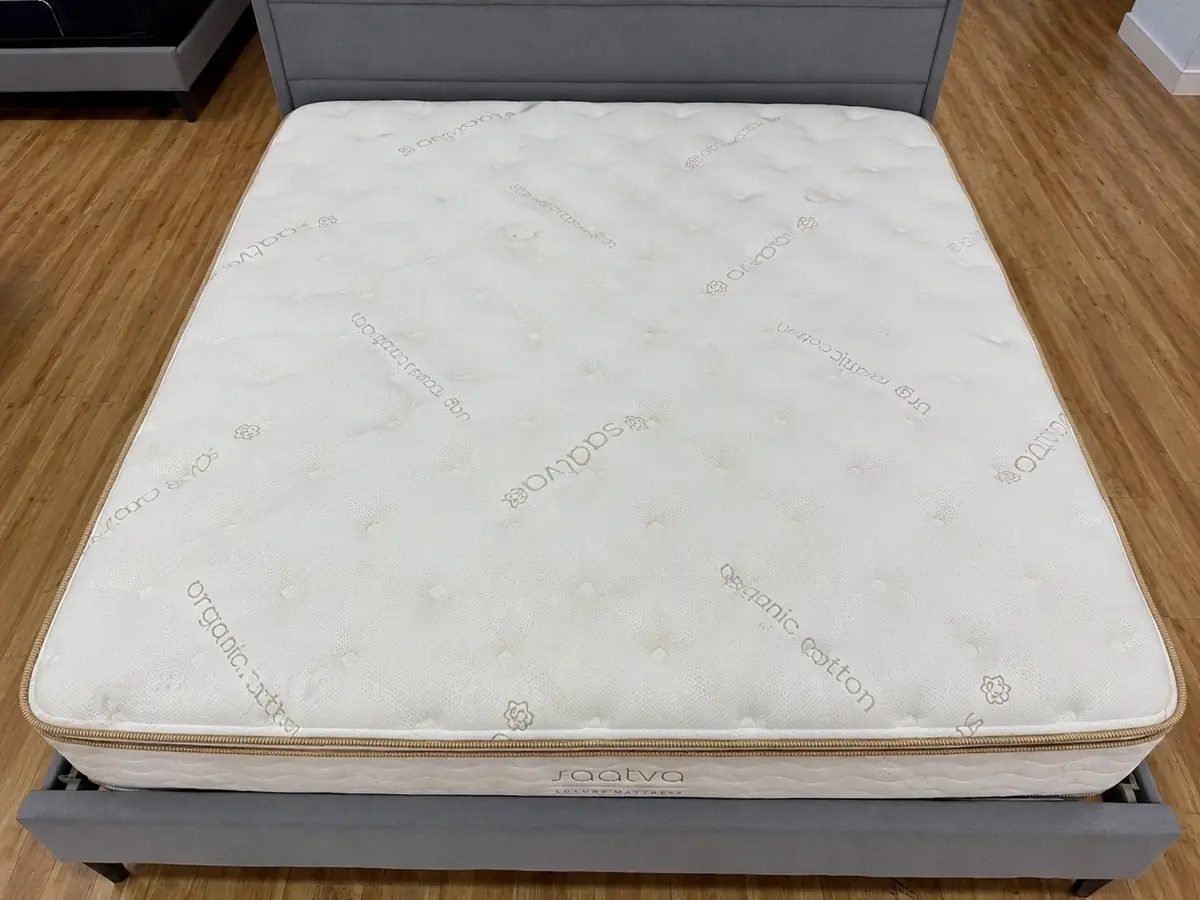
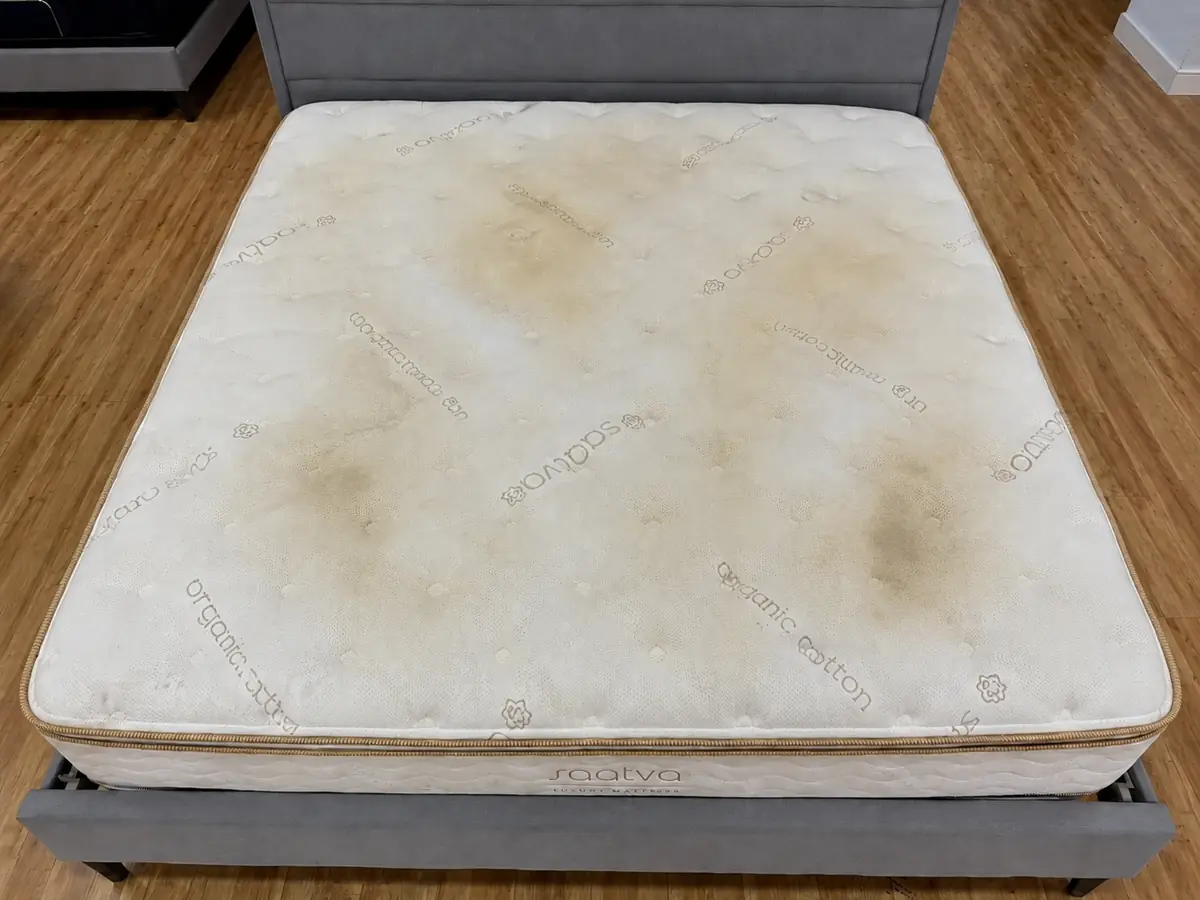
Drag to see the difference
A real result from our mattress before and afters across Orlando.
How to deodorize a mattress with baking soda
Baking soda is the simplest deodorizer there is, and it works because it absorbs moisture and neutralizes odor at the source instead of covering it with fragrance. Sprinkle an even layer across the whole mattress, and if you like, mix a few drops of an essential oil into the baking soda first for a light, clean scent. Leave it for one to two hours for everyday freshening, or several hours for a mattress that smells musty from humidity. Then vacuum slowly and thoroughly. For a bed that still smells off after this, the odor is usually deeper in the padding and needs a proper extraction rather than a surface treatment.
How often should you clean a mattress
A good rhythm for most homes is to deep clean and deodorize the mattress about every six months, wash your sheets and bedding weekly in hot water, and rotate the mattress when you clean it so it wears evenly. If you have pets that sleep on the bed, allergies or asthma, or you live in a humid part of Orlando without much air conditioning, move to every three or four months. The goal is to stay ahead of the moisture and skin-cell buildup that feeds dust mites rather than trying to rescue a mattress that has gone months without any attention.
When to call a professional
Home cleaning handles routine freshening well, and for a healthy mattress with no real stains, the steps above are all you need. It makes sense to call a professional when a stain has set in, when pet urine has soaked into the padding, when a musty or persistent odor will not lift, or when someone in the home has allergies or asthma and you want the deepest possible clean. A professional hot-water extraction reaches moisture and residue that a home vacuum and baking soda cannot, and it removes far more of what triggers symptoms.
At Pink Upholstery Cleaning we clean and sanitize mattresses in homes across Orlando, from College Park and Winter Park to the rest of the metro. If you would rather skip the afternoon of work, our mattress cleaning service can handle it, and every quote is free.

Natalia is the owner of Pink Upholstery Cleaning, a woman-owned, insured upholstery, furniture and mattress cleaning business serving Orlando, Florida. She cleans couches, mattresses and chairs across the Orlando area every week, so the advice here comes from hands-on experience, not theory.
Questions, answered
How do you get blood out of a mattress?
Cold water only. Heat sets protein stains permanently, so never use hot water or a steam cleaner on blood. Blot from the outside in with cold water and a little dish soap, follow with an enzyme cleaner if a shadow remains, and keep 3 percent hydrogen peroxide as a last resort after testing a hidden corner. Use as little liquid as possible, because a mattress cannot be rinsed.
Can you wash a mattress topper?
It depends what is inside it. Memory foam and latex toppers must never be machine washed, because the agitation damages the foam and it holds water that will not dry out, which risks mildew inside. Fiberfill, down and feather toppers can often be washed if the care tag allows and the machine is big enough, on a gentle cycle in cool water, then dried on low heat until completely dry.
How do you clean a foam mattress topper?
Spot-clean it rather than washing it. Vacuum both sides, treat marks with the least liquid that will lift them, blot out far more than you put in, then dry it flat with air moving over both faces. Foam gives up water slowly, so allow considerably longer than feels necessary before it goes back on the bed.
How do you deep clean a mattress?
Strip the bed and wash the bedding in hot water, vacuum the entire mattress including the seams, spot-treat any stains, then sprinkle baking soda over the surface to absorb moisture and odor. Let it sit for at least an hour, vacuum it up, and let the mattress air out fully before you make the bed again.
Can you clean a mattress with baking soda?
Yes. Baking soda is the simplest and gentlest way to deodorize a mattress. It draws out moisture and neutralizes odor rather than masking it. Sprinkle an even layer over the whole mattress, leave it for one to two hours or longer, then vacuum it off.
How often should you clean your mattress?
Deep clean and deodorize your mattress about every six months, and wash your sheets and bedding weekly in hot water. Clean more often if you have pets, allergies, or live somewhere humid like Orlando, where dust mites reproduce faster.
How do you get yellow sweat stains out of a mattress?
Mix a paste of baking soda, a little hydrogen peroxide and a drop of dish soap, test it on a hidden area first, then dab it onto the stain, let it dry and vacuum the residue. Work from the outside in and blot rather than rub. Some old, set-in stains are permanent, and a professional clean gives the best chance of lifting them.
Does cleaning a mattress get rid of dust mites?
It reduces them a lot. Vacuuming removes mites and their food source, washing bedding above 130 degrees kills them, and keeping indoor humidity below 50 percent stops them reproducing. For allergy or asthma concerns, a professional deep clean and sanitizing extraction goes further than home methods.
Can you clean a memory foam mattress the same way?
The steps are the same, but use far less moisture. Foam absorbs liquid and traps it, which leads to mold and can break the foam down, so never soak a memory foam or hybrid mattress and never use a steam cleaner on it. Spot-clean lightly, blot instead of soaking, and dry it fully before you remake the bed.
Explore our cleaning services
Want your mattress deep cleaned instead?
Get a free, no-obligation quote today. Call or book online and most weeks we have same-week openings across Orlando.
Prefer to call? Lines are open 24/7. You'll get an instant text back, and we reply fast to schedule your visit or send a free quote.