
Can You Get Mold Off a Couch? (And When You Cannot)
What is in this guide
The honest answer
Sometimes, and it depends entirely on where the mould is rather than how bad it looks. Surface mildew sitting on the fabric usually comes off. Mould that has grown into the foam padding underneath generally does not, because foam is porous and the growth is inside the material rather than on top of it.
We clean upholstery in Florida, so we see a lot of this, and we turn some of it down. A couch that sat wet for a week is not a cleaning job, and quoting one as though it were would be taking money for a result we cannot deliver. This guide is mostly about telling the two apart before you spend anything.
Surface mildew or mould in the foam
Take the cushions off, unzip one if the cover allows it, and put your face close to the deck underneath. Then match what you find.
Fuzzy or powdery patches on the fabric surface, wipe away and leave a light mark
Surface mildew. Caught early. This is treatable at home or professionally.
Musty smell but nothing visible, and it fades when the room is dry
Moisture, not growth yet. Dry it hard now and you avoid the whole problem.
Smell is stronger at the deck under the cushions than on top
Growth below the fabric. Needs extraction, and the outcome depends on how far it has gone.
Cushion feels damp inside days after any spill or clean
Moisture trapped in the foam. The foam is the problem. Treating the cover changes nothing.
Black or green staining that has spread through the cushion when you unzip it
Mould in the padding. Porous foam that has grown mould through cannot be reliably cleaned.
It was wet for days, after a flood, a leak or storage
Assume the foam is gone. Time wet matters more than what it looks like on the outside.
How to treat surface mildew
Worth trying when the growth is genuinely on the fabric and the piece has not been soaking. Check the cleaning code first, because the usual advice assumes a water-safe fabric and an S-code piece needs a solvent instead.
- Take it outside. Sunlight and moving air both work against mould, and it keeps spores out of the room.
- Vacuum with the outdoor exhaust away from you. Lift the loose growth before any liquid touches it, since wetting it first turns powder into a smear.
- Treat the fabric by code. Diluted white vinegar on a W or WS fabric, worked gently and not soaked. Rubbing alcohol on an S code. Test a hidden patch first.
- Blot out more than you put in. Adding moisture to a mould problem is the one thing that guarantees it returns.
- Dry hard and fast. A fan on both faces of the cushion, air conditioning running, for hours rather than minutes. This step is the actual treatment. Everything before it is preparation.
If the smell or the marks return within a week, the growth was never on the surface, and no amount of repeating this will change that.
When the couch is not worth saving
This is the part most cleaning advice avoids. The EPA’s guidance on mould cleanup is that porous materials which have absorbed moisture and grown mould often have to be discarded, because the growth cannot be adequately removed from inside the material. Upholstery foam is exactly that kind of material.
Replace rather than clean when any of these are true.
- The piece was wet for more than a couple of days, after a leak, a flood or damp storage.
- Unzipping a cushion shows staining that has spread through the foam.
- The musty smell survives a thorough dry-out with real airflow.
- The frame or the deck itself is affected rather than just the cushions.
A cushion insert can sometimes be replaced on its own while the frame and covers are kept, which is worth asking an upholsterer about before writing off a piece you like.
Why this happens so often in Florida
Mould needs moisture, and Central Florida supplies it. Indoor humidity here keeps upholstery damp for hours longer than the same piece would stay damp in a dry climate, so a cushion that would air out overnight elsewhere can still be damp the next day. Give that enough repetitions and the foam never really dries.
It is also why over-wetting a couch is a worse mistake here than almost anywhere else, and why the most common cause we see is not a flood at all. It is a well-meant home clean with a rented machine that put more water into the cushion than it could pull back out.
Keeping it from coming back
- Keep indoor humidity down. This is the single biggest lever and it costs nothing but running the air conditioning.
- Dry every spill fully rather than blotting the surface and moving on.
- After any cleaning, put a fan on the cushions until they are dry all the way through, not just to the touch.
- Leave a gap behind a couch on an exterior wall so air can move.
- Do not store upholstery in a garage or unconditioned space, which is where most of the worst cases start.
Not sure whether yours is worth cleaning
Send us a photo and tell us how long it was wet. We will tell you honestly whether it is a cleaning job or a replacement, before you spend anything. We clean upholstery across Orlando and every quote is free.
Prefer to call? Lines are open 24/7. You'll get an instant text back, and we reply fast to schedule your visit or send a free quote.
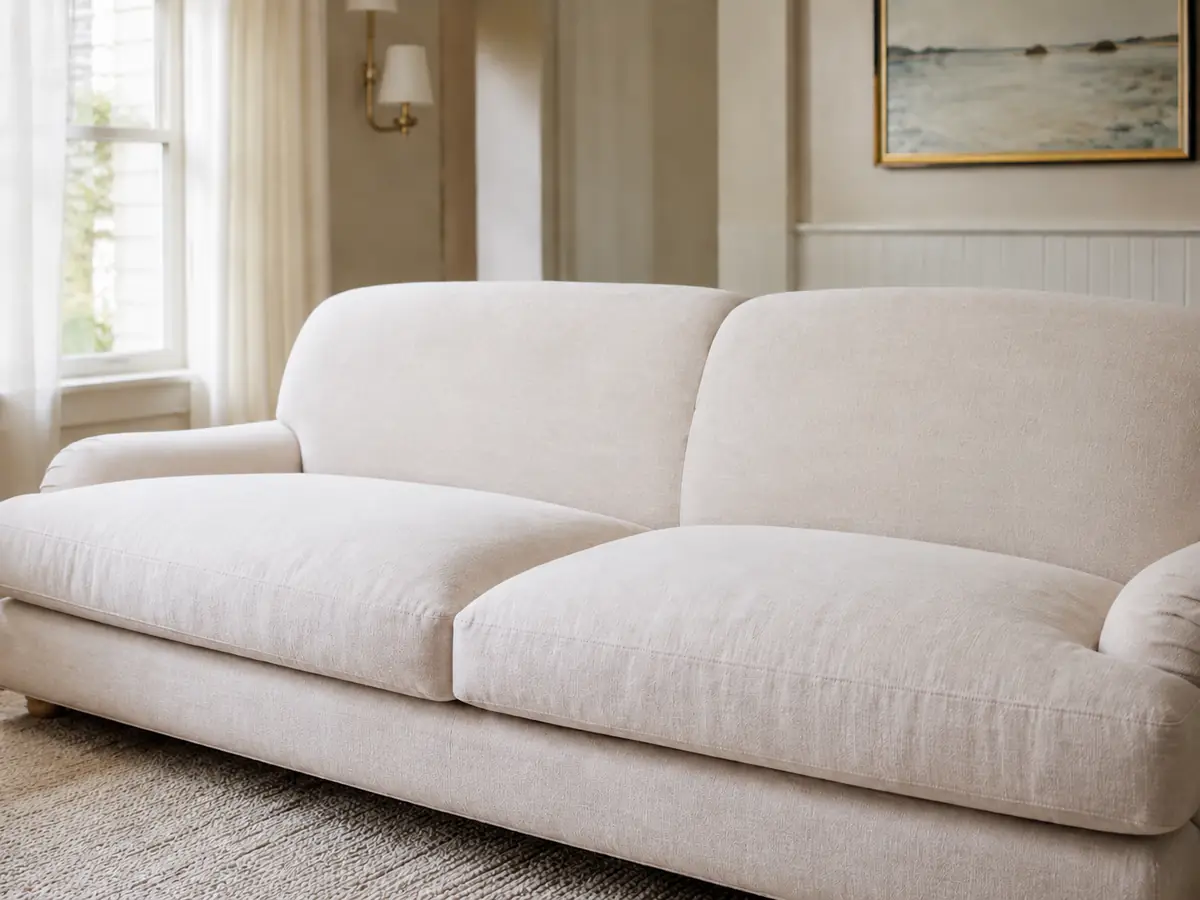
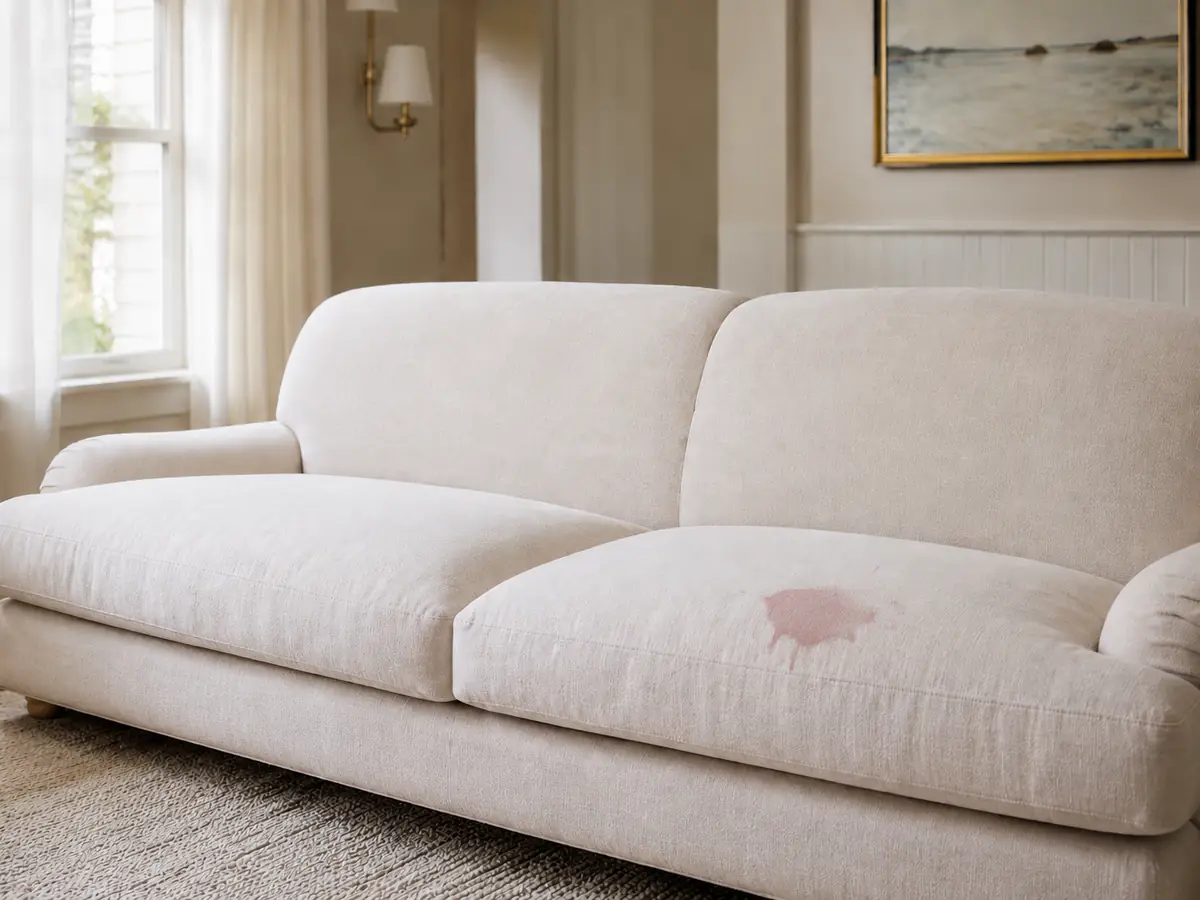
Drag to see the difference
A real result from our couch and sofa before and afters around Orlando.
At Pink Upholstery Cleaning we treat surface mildew and extract the moisture underneath it for homes across Orlando, and we say so plainly when a piece has gone too far to be worth it. Couch cleaning starts from $149 with a $115 minimum service. Our couch and sofa cleaning page has the detail, and our guide to couch odour covers the musty smell in more depth.

Natalia is the owner of Pink Upholstery Cleaning, a woman-owned, insured upholstery, furniture and mattress cleaning business serving Orlando, Florida. She cleans couches, mattresses and chairs across the Orlando area every week, so the advice here comes from hands-on experience, not theory.
Questions, answered
Can you get mold off a couch?
Surface mildew on the fabric can usually be removed, and it is worth trying. Mould that has grown into the foam padding underneath generally cannot be cleaned out reliably, because foam is porous and the growth is inside it rather than on it. The honest test is where it lives, not how bad it looks.
How do you tell surface mildew from mould in the foam?
Take the cushions off and smell the deck underneath. If the smell is stronger down there than on the seat, or a cushion still feels damp inside days after it was last wet, the problem is below the fabric. Surface mildew sits on the fabric, wipes away and leaves a light mark behind.
Does vinegar kill mold on a couch?
Diluted white vinegar helps with light surface mildew on a water-safe fabric and is a reasonable thing to try. It does not reach growth inside foam padding, so if the smell returns after a few days the problem was never on the surface.
Should I throw away a mouldy couch?
If mould has grown through the foam, usually yes. The EPA's guidance on mould is that porous materials which have absorbed moisture and grown mould often have to be discarded, because the growth cannot be adequately removed from inside the material. A couch that sat wet for days after a flood or leak is the clearest case.
Can professional cleaning remove mould from upholstery?
It can remove surface mildew and extract the moisture that caused it, which stops it recurring. It cannot make foam that has grown mould through its structure sound again. We will tell you which of those you have before we quote, because paying to clean a couch that needs replacing helps nobody.
Why does my couch keep getting mouldy in Florida?
Because indoor humidity here keeps upholstery damp far longer than it would stay damp in a dry climate. Mould needs moisture, and a cushion that never fully dries between spills, cleans or humid days gives it exactly that. Keeping indoor humidity down and drying upholstery quickly matters more here than any product.
Explore our cleaning services
Want an honest look before you decide
Get a free, no-obligation quote today. Call or book online and most weeks we have same-week openings across Orlando.
Prefer to call? Lines are open 24/7. You'll get an instant text back, and we reply fast to schedule your visit or send a free quote.